
A few years ago rumors of Vladimir Putin’s strange poop habit began circulating through international news outlets. The story goes that whenever Putin travels abroad, all of his bowel movements are transported back to Russia in a briefcase to prevent information about his health, DNA, or medications from falling into enemy hands.1 While this story is likely folklore, the idea that our excrement carries information about health is not. The promised bounty of data carried down your pipes has led some public health departments into the sewers, where viruses, bacteria, pharmaceuticals, recreational drugs, and biomarkers for oxidative stress can all be detected.2
Disease
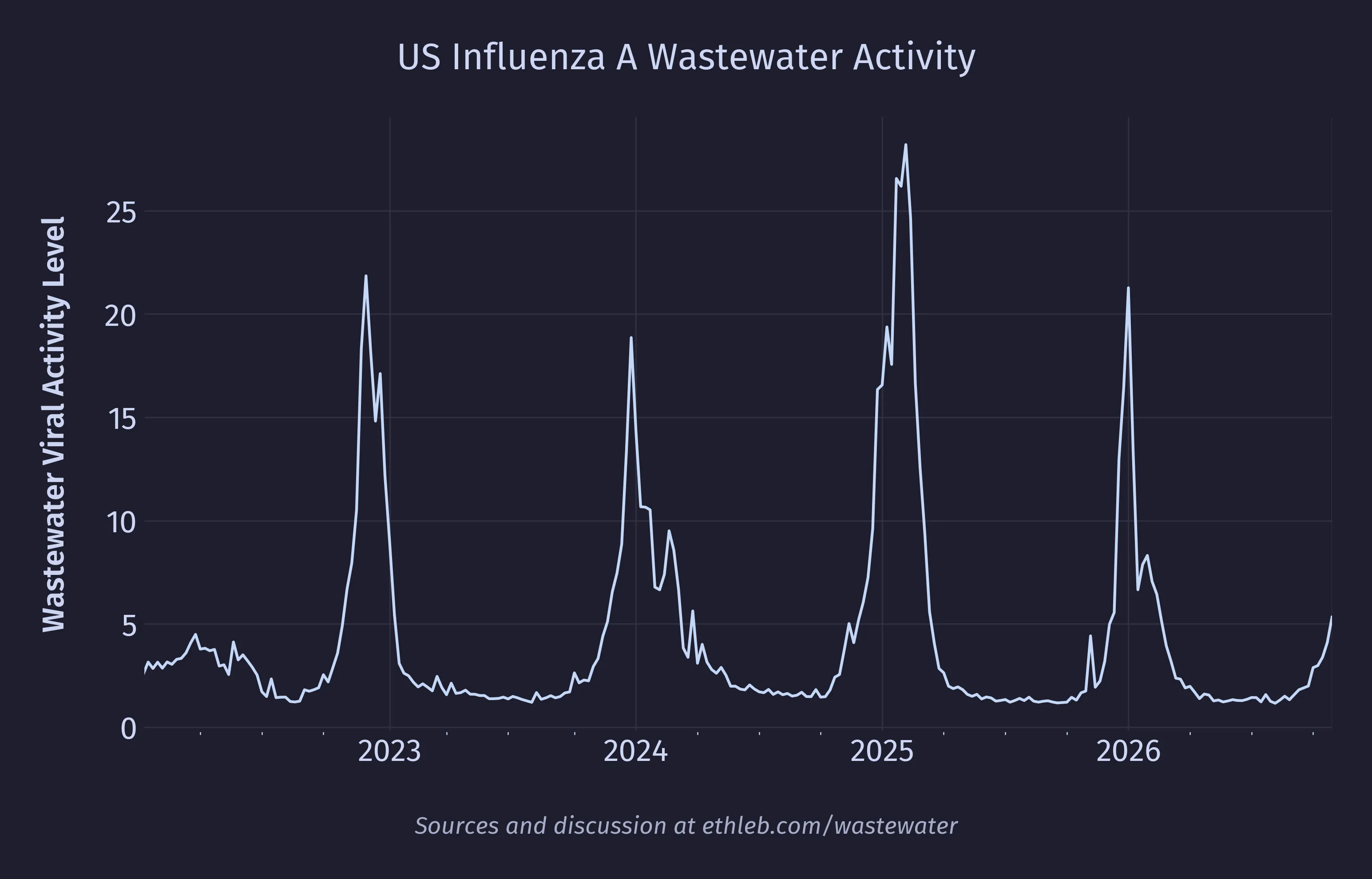
In September of 2020, as a response to the COVID-19 pandemic, the Centers for Disease Control and Prevention (CDC) launched the National Wastewater Surveillance System (NWSS).3 Currently, the NWSS analyzes wastewater samples from over 1,200 sites, covering 43% of the US population.4 The pathogens the NWSS tests for include COVID-19, Influenza A, RSV, Measles, Monkeypox, and avian influenza A(H5).4 Here, we can see wastewater viral activity levels for influenza A in the US since monitoring for the pathogen began in 2022:5
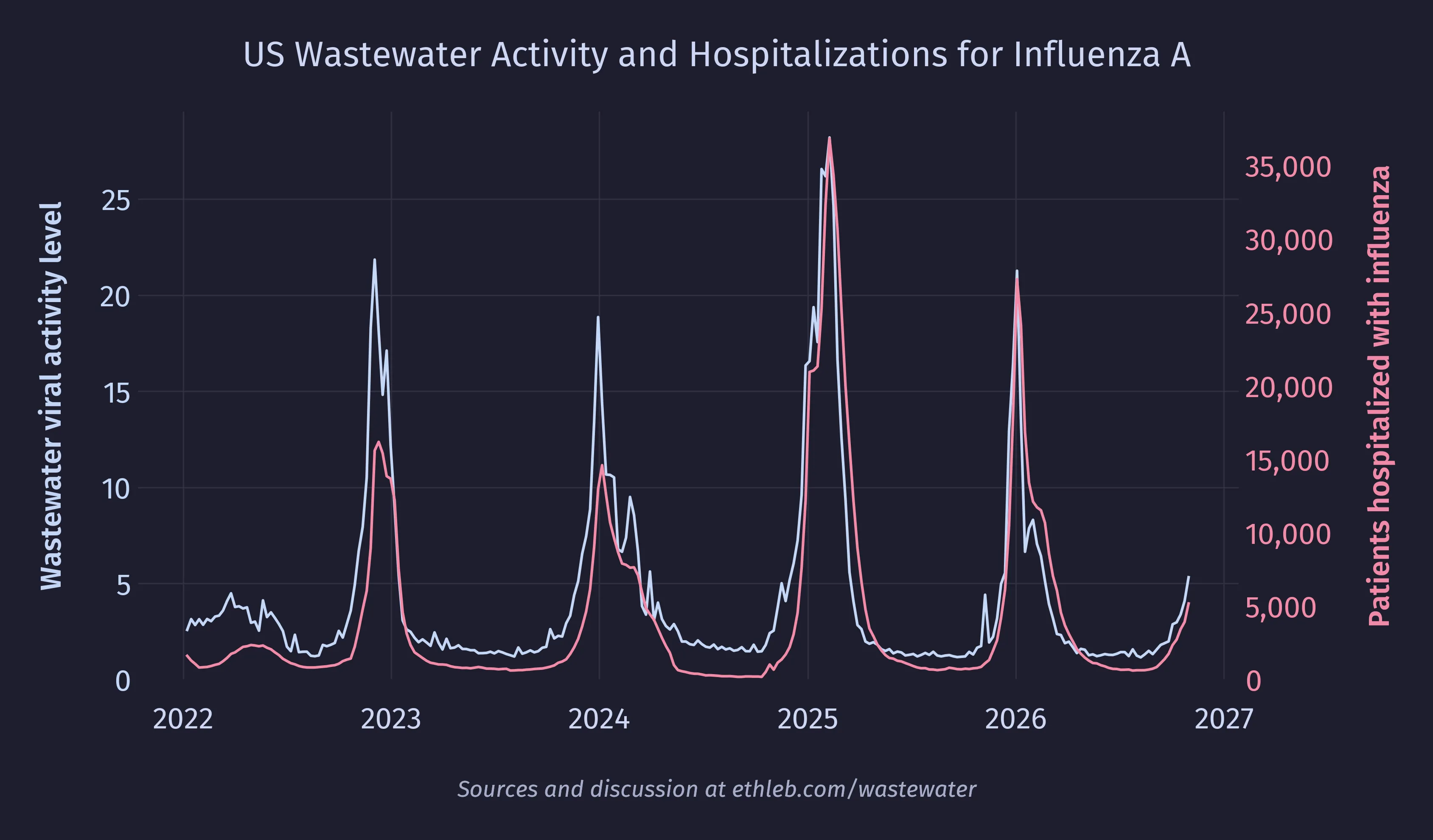
Overlaying the wastewater activity and influenza A hospitalization data6 for the same time period shows how correlated these signals are:
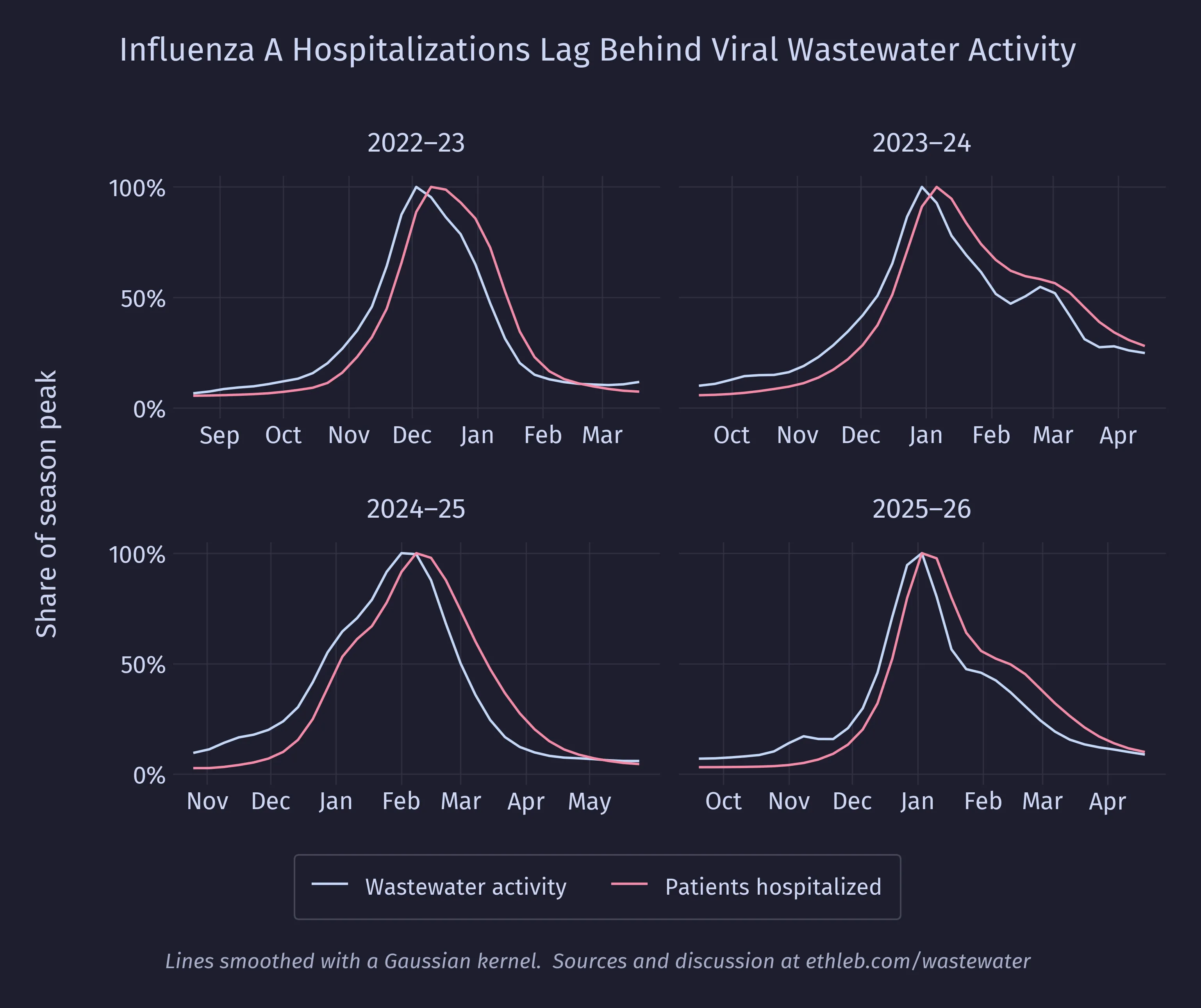
These pathogens show up in wastewater before hospitals see cases, and even before anyone shows symptoms. Thanks to this, wastewater monitoring can act as an early warning system for outbreaks of communicable disease. Zooming in on each season’s peak, smoothing the trends, and scaling the curves so they occupy the same height, shows that the hospitalizations lag slightly behind the wastewater signal:
Stealth pandemics
The lag is short for the Flu since its incubation is only a few days. As the incubation period of a pathogen grows longer, the hospitalizations lag further behind wastewater activity. This warning becomes especially valuable in the case of a “stealth pandemic”: a worst case scenario pandemic with a long incubation period, high transmissibility, and high lethality. In this case, a large fraction of humanity could become infected before the first person gets sick. This could occur naturally or be engineered as a bioweapon.7
In their report Securing Civilisation Against Catastrophic Pandemics, the Geneva Centre for Security Policy points out that a variety of pandemics have already shown some of the characteristics of a stealth pandemic:
The most obvious example is HIV, which is often associated with extremely mild or non-existent acute symptoms, but typically progresses to symptomatic AIDS and death after eight to ten years without treatment. Tuberculosis is asymptomatically present and immunologically suppressed in an estimated two billion people, but reactivates to kill over a million each year. The herpesvirus varicella zoster causes chickenpox upon initial infection and erupts into shingles after decades of latency. […] However, none of these pathogens combines the ability to infect most people in less than a decade with a high rate of eventual morbidity and mortality, and they therefore do not qualify as Stealth agents capable of threatening civilisation.8
In the absence of any historical precedent they conclude that the likelihood of a naturally occurring stealth pandemic is negligible. In contrast, they forecast a much higher probability for the accidental or intentional release of an engineered stealth pandemic. They put the probability of an accidental release at 0.12% to 4.8% per year per laboratory working on one, and the probability of an intentional release even higher once “credible blueprints for a stealth pathogen are publicly available”. They do not forecast a probability for blueprints becoming available.8
The case for metagenomic sequencing
Most wastewater monitoring implemented today is targeted, testing for a narrow set of viruses. Detecting novel pathogens, including stealth pandemics, requires sequencing all genetic material in a sample (called metagenomic sequencing) and is substantially more expensive. The Nucleic Acid Observatory Consortium (NAOC) lays out their case for setting up a comprehensive metagenomic monitoring system in both wastewater and natural watersheds in their paper A Global Nucleic Acid Observatory for Biodefense and Planetary Health. They write:
The world’s demonstrated vulnerability to SARS-CoV-2 appears reason enough to invest in a comprehensive early-warning system. The United States has lost more citizens to the pandemic than it has in all military conflicts in the past century, yet it devotes less than 1% of its defense budget to biodefense.9
Even though the first cases [of COVID-19] were estimated to have occurred in November or possibly October, they were not detected until December. Had governments acted just a few weeks earlier, the virus may have been excluded from many more countries or even eradicated before becoming a global pandemic, as was accomplished for SARS-CoV-1 in 2003 and Ebola in 2014-2015. […] When an enemy can spread exponentially, an early detection and response requires exponentially fewer resources to achieve containment and eradication.9
They also point out a variety of other instances where such a monitoring system would be valuable. Agriculture, too, can suffer from pandemics and blights, including fungal blights famously leading to famine in Ireland, and the 2018-2019 outbreak of African swine fever that killed 13%-27% of the world’s pigs. It could also be used for earlier detection and containment of invasive species, which are a leading cause of extinction and cause damage to agriculture and forestry. Invasive species cost the US $54 billion each year, and early detection has been associated with more successful eradication of invasive species in the past. Such a monitoring system could also be useful for other ecological purposes, including monitoring populations of endangered species. Furthermore, most of life on earth has not been sequenced. The authors write:
The scientific benefits of sequencing most of the remaining genetic diversity on Earth would extend far beyond conservation […] Microbial and macrofaunal ecology, population genetics, geochemistry, evolutionary biology, and many more disciplines would be utterly transformed by such a treasure trove of data.9
The NAOC estimates that running such a system to monitor the US would cost $5-15 billion each year, depending on how detailed we want the data to be. They point out that compared to the $54 billion in annual damages caused by invasive species, and the roughly $16 trillion cost by COVID-19,10 the cost of widespread metagenomic monitoring is a bargain. In fact, by helping to eradicate new invasive species alone, the system could nearly pay for itself. Also, since the cost of sequencing is dropping quickly, it will likely cost substantially less in the future.9
Drugs
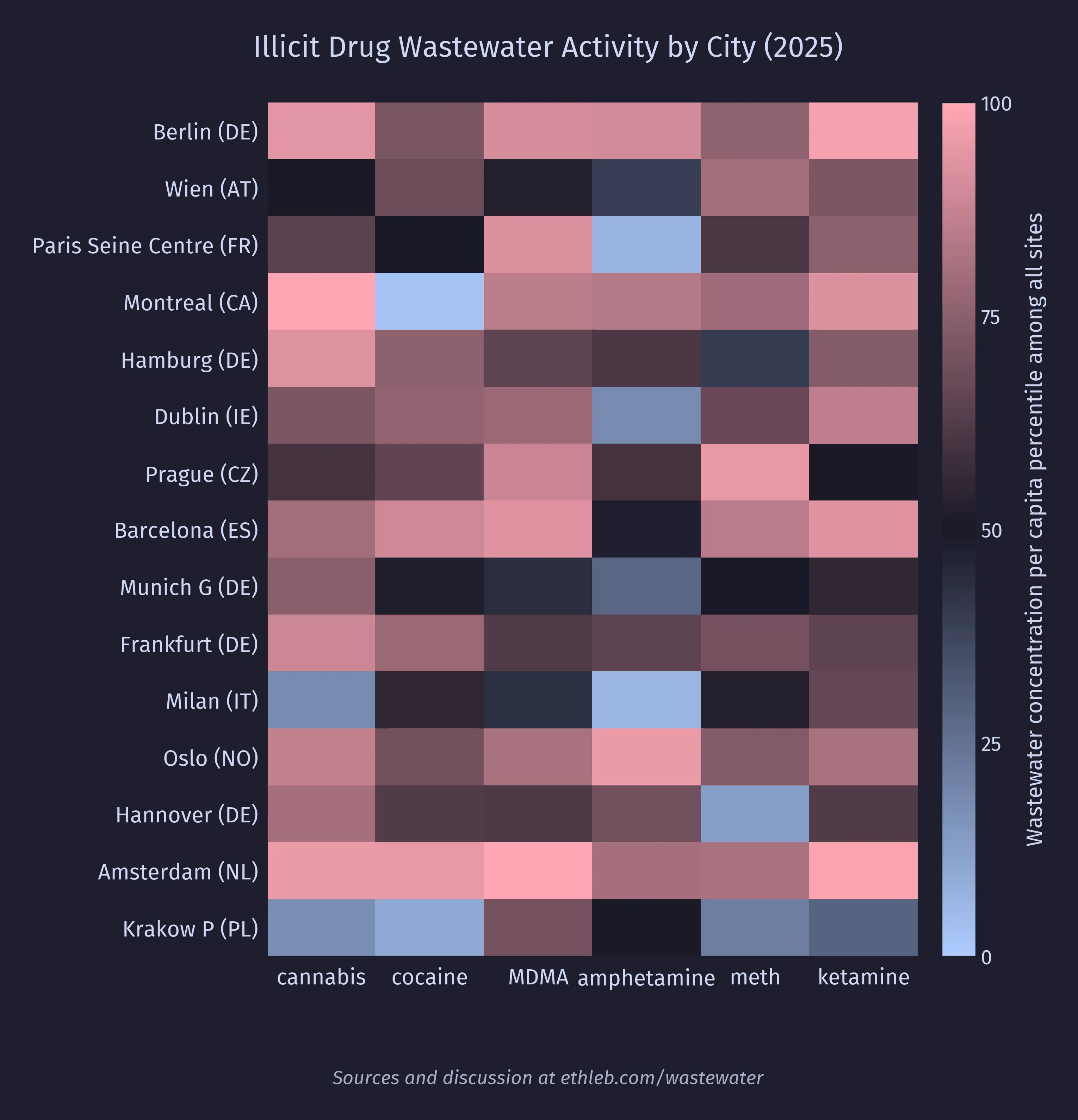
When a person uses a drug it shows up in wastewater (think peeing in a cup for a drug test). This can be used to gain insight into both illicit drug use, and pharmaceutical use. It is even being used to gauge how much naloxone (the active ingredient in Narcan, a drug for reversing opioid overdoses) is being used, and could hypothetically be used to estimate antibiotic compliance. One group doing wastewater monitoring for drug use is the SCORE network: “a network of more than 50 partners covering over 35 countries (+130 cities) across the world and have been active in the field of wastewater-based epidemiology (WBE) since 2011.”11 Once a year they gather one week of data in participating cities. The dataset I’m using can be found here. SCORE measures wastewater signal for six illicit drugs. Below is data from some of their highest population monitoring sites with 2025 data. Redder colors represent a higher percentile for wastewater concentration per capita among all cities measured:
And this heatmap shows the wastewater signal on different days of the week for each drug, across all of the monitoring sites. The color scale has been compressed at its extremes so that the dramatic MDMA trend doesn’t completely overshadow the others:
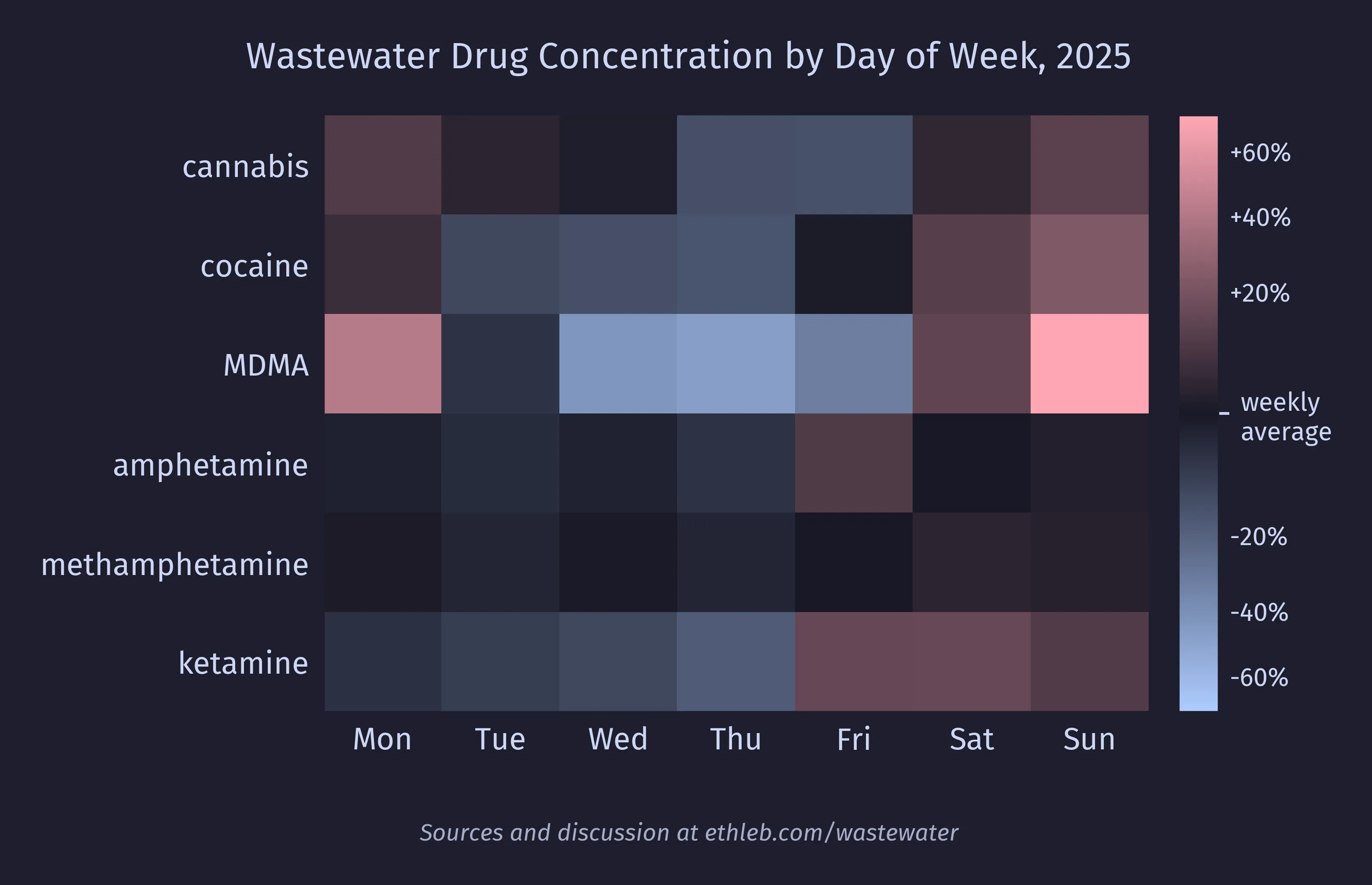
It is interesting to see some of the drugs showing much stronger signal during and directly after the weekend, most notably MDMA. In contrast, methamphetamine shows almost no variation across the week. Here is the comparison as a line graph:
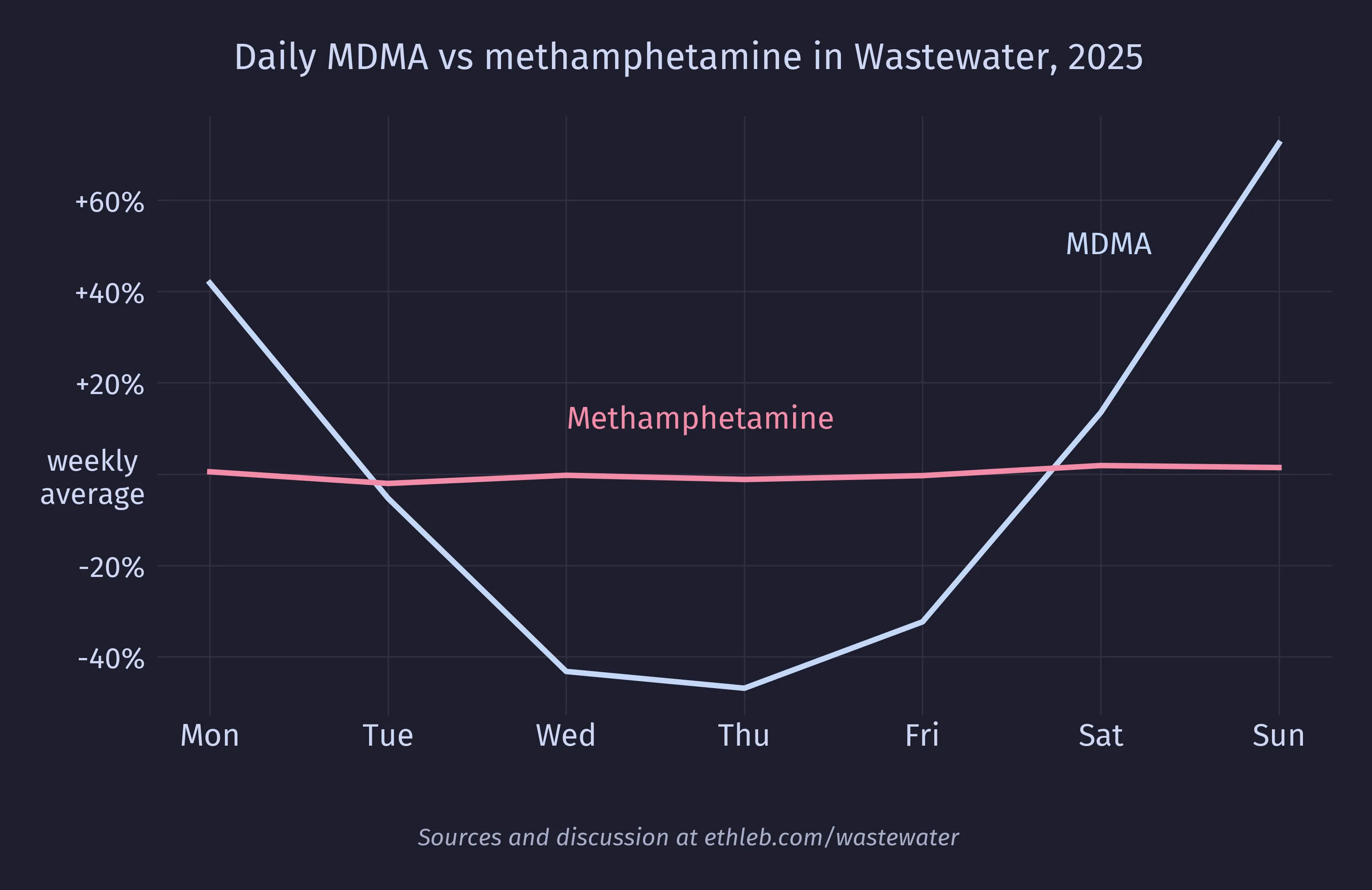
Caution should be taken when interpreting these charts. It seems less likely that people are doing a lot of MDMA on Mondays, and more likely that people are simply still peeing it out from the weekend.
In partnership with the US wastewater monitoring company Biobot Analytics, the research company Mathematica found that, in two of the counties they were monitoring, xylazine (a tranquilizer contaminating the opioid supply that doesn’t respond to naloxone) was detectable in wastewater four weeks before the first overdoses from the drug occurred. They also noted that fentanyl concentration in two Kentucky counties’ wastewater modestly decreased after the state decriminalized fentanyl test strips (though the decrease was only statistically significant in one county), highlighting how wastewater data could be used to evaluate policy changes.12
Ethics
In general wastewater based epidemiology is thought to have fairly low ethical risk when implemented in sewer catchments that serve large populations. In these instances, the data gathered is anonymized by design, and describes a segment of society rather than any individual.13 Nonetheless, SCORE lays out some areas of ethical concern.
Included in these is the risk of sensationalized news coverage contributing to stigmatization of certain groups, and possibly “generat[ing] political incentives to ‘get tough’ on drug use and crime, displacing more effective policing strategies and bringing more drug users into the criminal justice system.”14 The danger of this is higher when monitoring the wastewater of small areas or institutions, such as prisons, schools, and individual neighborhoods. To mitigate these risks SCORE recommends carefully considering how published data could be interpreted or misinterpreted by media and how governments might feel pressured to act in response. When appropriate, wastewater samples can even be mixed together before testing, helping reduce privacy issues that arise when the data becomes too high resolution. SCORE notes that extraordinary care should be taken to avoid causing harm through wastewater monitoring, considering consent is generally not acquired from the “participants”.
Conclusion
Considering the enormous potential for harm caused by pandemics, it seems obvious that we should be willing to make substantial investments to defend against them. This is made more salient by the very recent COVID-19 pandemic costing the US an estimated $16 trillion,10 and over a million lives during the years of 2020 through 2022 alone.15
The cost effectiveness of wastewater monitoring for pandemic prevention is difficult to calculate because a series of uncertainties compound on each other. For instance, how quickly would society be ready to begin an epidemiological response? Would the evidence of an outbreak be compelling enough to generate the political will necessary to act? How much later would a naive detection (involving symptoms and hospitalizations) have taken, and what proportion of future pandemics will have an incubation period long enough for a wastewater based early warning to be valuable? How willing will the public be to comply with public health recommendations such as social distancing? Any or a combination of these could reduce the value of wastewater based early detection systems, and each of them deserves to be worked on in parallel.16
Though it is currently unclear how valuable wastewater monitoring is to prevent most pathogens, in the specific case of stealth pandemics early detection remains irreplaceable. Wastewater monitoring also promises to be an interesting tool for a variety of other areas of public health. Personally, I will be watching the sewers over the coming years with great excitement.
Footnotes
-
https://thewire.in/humour/vladimir-putin-poop-suitcase-spy-health-viral ↩
-
https://data.cdc.gov/Public-Health-Surveillance/CDC-Wastewater-Viral-Activity-Level-for-SARS-CoV-2/atcp-73re/about_data ↩
-
https://data.cdc.gov/Public-Health-Surveillance/Weekly-Hospital-Respiratory-Data-HRD-Metrics-by-Ju/ua7e-t2fy/about_data ↩
-
https://securebio.org/blog/fund-the-nao-to-detect-pandemics/ ↩
-
https://www.gcsp.ch/publications/securing-civilisation-against-catastrophic-pandemics ↩ ↩2
-
https://www.mathematica.org/publications/new-uses-of-wastewater-data-on-high-risk-substances# ↩
-
https://www.emcdda.europa.eu/drugs-library/ethical-research-guidelines-wastewater-based-epidemiology-and-related-fields_en ↩
-
https://forum.effectivealtruism.org/posts/aLkvsscberqhqsWpz/three-reasons-early-detection-interventions-are-not ↩